




Removing Stress from Reading
Learning to read can be stressful. It can also be a lot of fun! As a kindergarten teacher at the Academy, I am thankful everyday that we teach individual students how to read, rather than forcing each five and six year old student to fit a predetermined reading mold for which they might not yet be ready. According to the New York Times, few five year olds are even ready to be independent readers. Thinking that a kindergartener who isn’t reading simple books on his or her own is “behind” is stressful and can be detrimental for both the parent and the student. When a child associates reading with stress, they can be less likely to want to try it.
Written by Ms. Rachel Nowlin, Kindergarten Lead Teacher

Learning to read can be stressful. It can also be a lot of fun! As a kindergarten teacher at the Academy, I am thankful everyday that we teach individual students how to read, rather than forcing each five and six year old student to fit a predetermined reading mold for which they might not yet be ready. According to the New York Times, few five year olds are even ready to be independent readers. Thinking that a kindergartener who isn’t reading simple books on his or her own is “behind” is stressful and can be detrimental for both the parent and the student. When a child associates reading with stress, they can be less likely to want to try it.
In kindergarten, reading is made fun! Our students are grouped with other like-minded students to work on the aspects of reading they are ready for. If they crave books, we give them books and they enjoy the challenge! If they are still cementing their letter sounds, we play fun games to help them nail these down. If they are still learning to recognize their letters, we give them lots of exposure through games and activities while making sure that they associate letters with fun so they want to start reading when they’re ready.
We also don’t load down our students with reading homework they will struggle to do, but we encourage families to spend time together by reading books out loud to their children. Even when kids start to learn how to read, they still want you to read to them. I love hearing from my students about how their parents read them Bible Stories every day at home. They hold on to those memories! Deuteronomy 6:7 talks about the necessity of parents teaching their children about God’s word, “You shall teach them diligently to your children, and shall talk of them when you sit in your house, and when you walk by the way, and when you lie down, and when you rise.”

I love reading. I grew up reading and still love it. So, it didn’t take long this year for my students to start copying me by saying, “It’s my favorite class - Reading!”
UNITY!
A new year and new semester brings a time to set goals for the rest of the school year and even beyond. On the first day back from winter break, students discussed this verse and goals they have for themselves and our class. They discussed how being unified in a task makes it much more doable than if a person is trying to work alone. I gave them the example of how Headmaster Garner wanted to start a school that would holistically educate children but he needed teachers that had the same heart for children and the Lord in order to make the Academy what it is now.
Written by Mrs. Hayley Gowen
“Behold, how good and pleasant it is when brothers and sisters dwell in unity!“ Psalm 133:1
A new year and new semester brings a time to set goals for the rest of the school year and even beyond. On the first day back from winter break, students discussed this verse and goals they have for themselves and our class. They discussed how being unified in a task makes it much more doable than if a person is trying to work alone. I gave them the example of how Headmaster Garner wanted to start a school that would holistically educate children but he needed teachers that had the same heart for children and the Lord in order to make the Academy what it is now.
The students agreed that this semester they want to grow in their relationships with one another and set a goal to be kind to one another. They also created personal goals that included:
helping people to get along
learning to solve conflicts
helping others when needed, and then praying for them

The first two weeks of each semester is spent helping students reorient to the learning environment and enjoy team-building activities with their classmates and teachers.
These goals will be a stepping stone for bringing about unity in our classroom. I’m excited about where this semester takes these students when they are so insightfully setting goals that will help them learn how to love their neighbor. Practically, students will participate in a time of focused prayer where they will grow in their endurance to pray for longer periods of time, more times of group prayer, and discussion of topics related to their semester goals. It’s going to be a wonderful semester

Mixed-Age Learning Activities Boost Patience and Cooperation
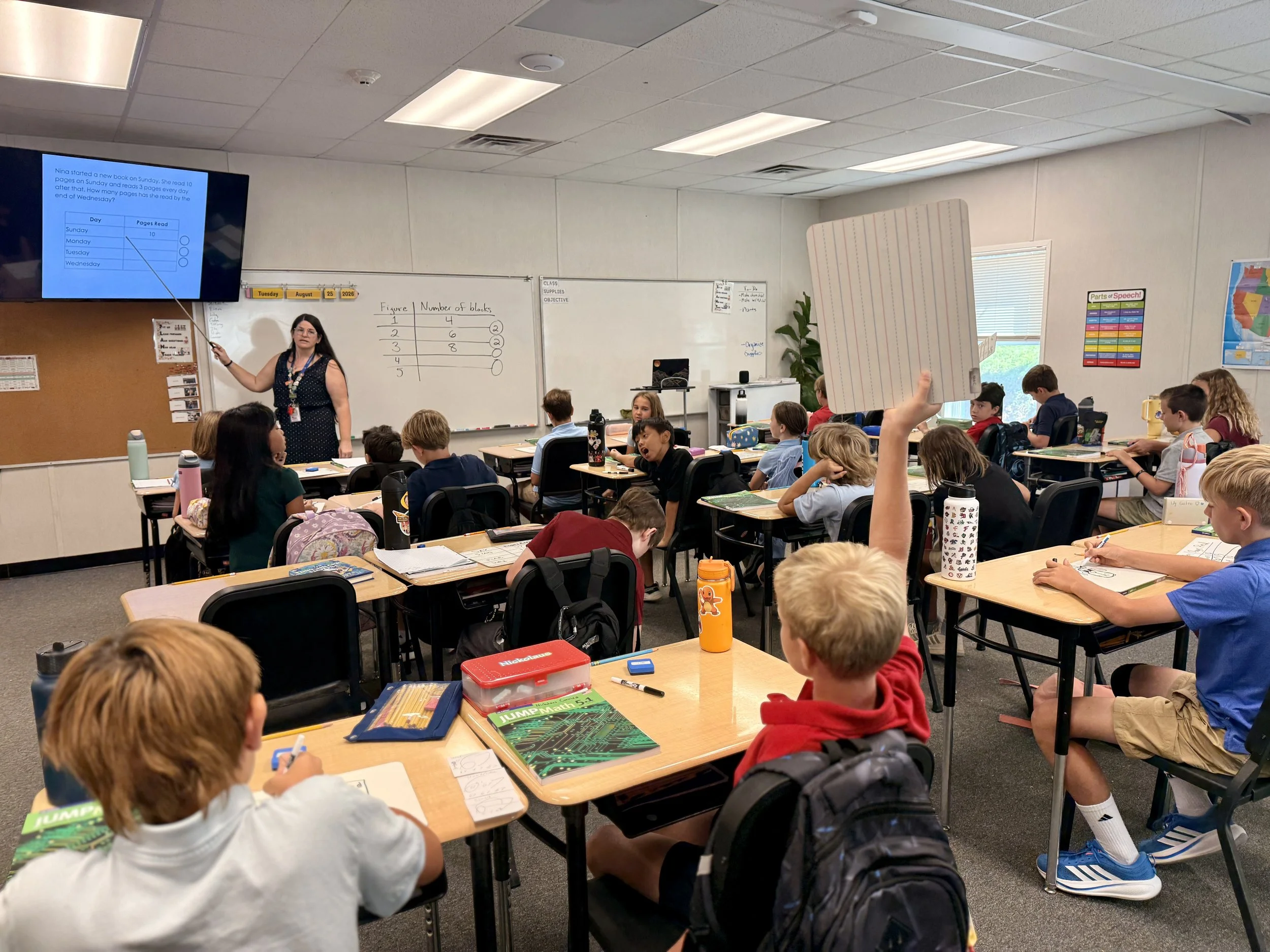
In the Specifics B classroom we’ve been doing some mixed-age activities, which focus on getting to know some younger students better. In my homeroom class (“India”), students range from ages 9-10, while the Tanzania/South Korea students are just a year younger at 8-9 years. All these homerooms fall within the ‘Specifics’ level.
Written by Ms. Rebekah Davis, Specifics Level Lead Teacher
In the Specifics B classroom we’ve been doing some mixed-age activities, which focus on getting to know some younger students better. In my homeroom class (“India”), students range from ages 9-10, while the Tanzania/South Korea students are just a year younger at 8-9 years. All these homerooms fall within the ‘Specifics’ level.

Students write and present a puppet show together as forum for learning more about their classmates.
On the first day back to school, students were eager to share about their winter breaks. Mrs. Benoit and I partnered up and assigned each India student a younger partner from the Tanzania class. They interviewed each other about their breaks and prepared to present to the whole class what they had learned from their partner. Their creativity was highly entertaining! Two students chose puppets as their form of presenting, and they proceeded to do a live show with Lincoln the Pig asking Walker the Cow about his Christmas vacation. My favorite question to Walker the Cow was, “What did you eat for Christmas dinner.” The ironic reply from the cow, “My favorite, Beef Brisket!”
This kind of mixed-age activity is highly recommended by experts, encouraging gentleness and patience in the older students, as the younger ones learn by watching and imitating their older peers. (CLICK HERE for more info) I love to set up opportunities for my students to engage both older and younger students!

Teaching Students, Not Classes
Why make education monotonous and repetitious when the students receiving it are so diverse? There’s a saying our Headmaster, Gregg Garner, taught us: “teach students, not classes.” When we teach classes, the content runs the high risk of becoming repetitive and monotonous for the students and for the teachers. And I get it, the teacher needs to get through all the material...whether the students were ready for it or not.
Written by Mr. Derek Bargatze, Generals Level Lead Teacher
Why make education monotonous and repetitious when the students receiving it are so diverse? There’s a saying our Headmaster, Gregg Garner, taught us: “teach students, not classes.” When we teach classes, the content runs the high risk of becoming repetitive and monotonous for the students and for the teachers. And I get it, the teacher needs to get through all the material...whether the students were ready for it or not.
However, a teacher who teaches students can accomplish the same goal, but recognizes that students are different. I have students that can read a word off the white board and never forget it. They have a better memory than I do. I have other students who can’t read those same words, but can draw a beautiful and realistic portrait of themselves. I have students that get overwhelmed emotionally from a conflict at lunch and just can’t bring themselves to focus in the next class. At the same time, I have a student who is completely unaware they caused that student to be so upset. Every student is different, and to teach them like they’re the same is doing my students a disservice.
A teacher’s job is to be able to speak the “learning language” of every student. I think of a few Bible verses every time I think of “teach students, not classes”: Ephesians 2:10 - “For we are his workmanship, created in Christ Jesus for good works, which God prepared beforehand, that we should walk in them.” Also, Isaiah 64:8, “Yet you, LORD, are our Father. We are the clay, you are the potter we are all the work of your hand.” God cares about our development as human beings, first and foremost. Before we concern ourselves with completing our curriculum (which is important), we must give attention to the beautiful students God has given us the privilege to teach. Part of caring for them is teaching in a way they can understand.
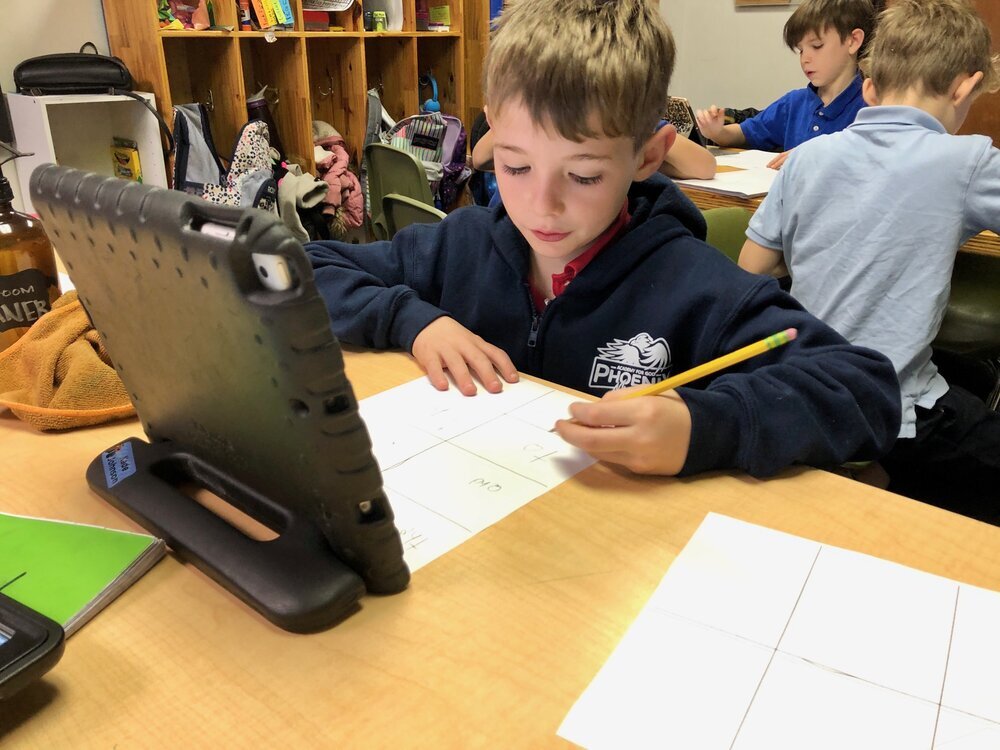
Elementary reading courses are fluid so that students are able to learn at an individual pace. Games and hands-on activities in the classroom make learning fun and inviting for our younger students.
The Theory of Multiple Intelligences by Howard Gardener, suggests “that each human being is capable of seven relatively independent forms of information processing, with individuals differing from one another in the specific profile of intelligences that they exhibit.” Vygotsky’s Theory on the Zone of Proximal Development teaches that students learn at a different pace and teaching done well makes room for students to learn at their pace alongside an educator, tutor or a more competent peer. Both of these philosophies are incorporated into the Academy’s paradigm for education.
What I love about the Academy for G.O.D. is that we make these modifications to our daily class schedules for all our students. Our Language Arts block looks like students excited to be in a class they can thrive in, and when they’ve mastered their benchmarks, they can move to a different and more challenging Language Arts class. The same goes for our STEM and Creative Arts courses as well. Students don’t leave their age mates for the entire day, but just for the class period and return right back to their homeroom for breaks (which our students have FIVE breaks in their day). We have observed that our students love learning because they are taught by teachers that teach in ways they learn. If a student needs to touch and move letters, then that’s what they get. If a student wants to write down word for word, then they can do it. If a student wants to write a sight word and then perform the action because it helps them learn it, then that’s what the student is doing. It’s simply a great place to learn!
Sources:
1. Gardner, H., & Hatch, T. (1989). Educational Implications of the Theory of Multiple Intelligences. Educational Researcher, 18(8), 4–10. https://doi.org/10.3102/0013189X0180080042. Ryan, K., Cooper M., J., & Tauer, S. (2013). Teaching for Student Learning: Becoming a Master Teacher. Belmont, CA: Linda Schreiber-Ganster.
Sacred Education
Last Sunday evening, I was trying to get my five kids (4-13 yo) to get focused while we sat in our living room for a small time of worship. Not surprisingly, they were wiggly, giggly, and basically like they normally are in that space. What can you expect, they’re kids right? At the same time, what should I expect from kids in that kind of moment?
Written by Mr. Rob Muñoz, K-6 Vice Principal
Last Sunday evening, I was trying to get my five kids (4-13 yo) to get focused while we sat in our living room for a small time of worship. Not surprisingly, they were wiggly, giggly, and basically like they normally are in that space. What can you expect, they’re kids right? At the same time, what should I expect from kids in that kind of moment?

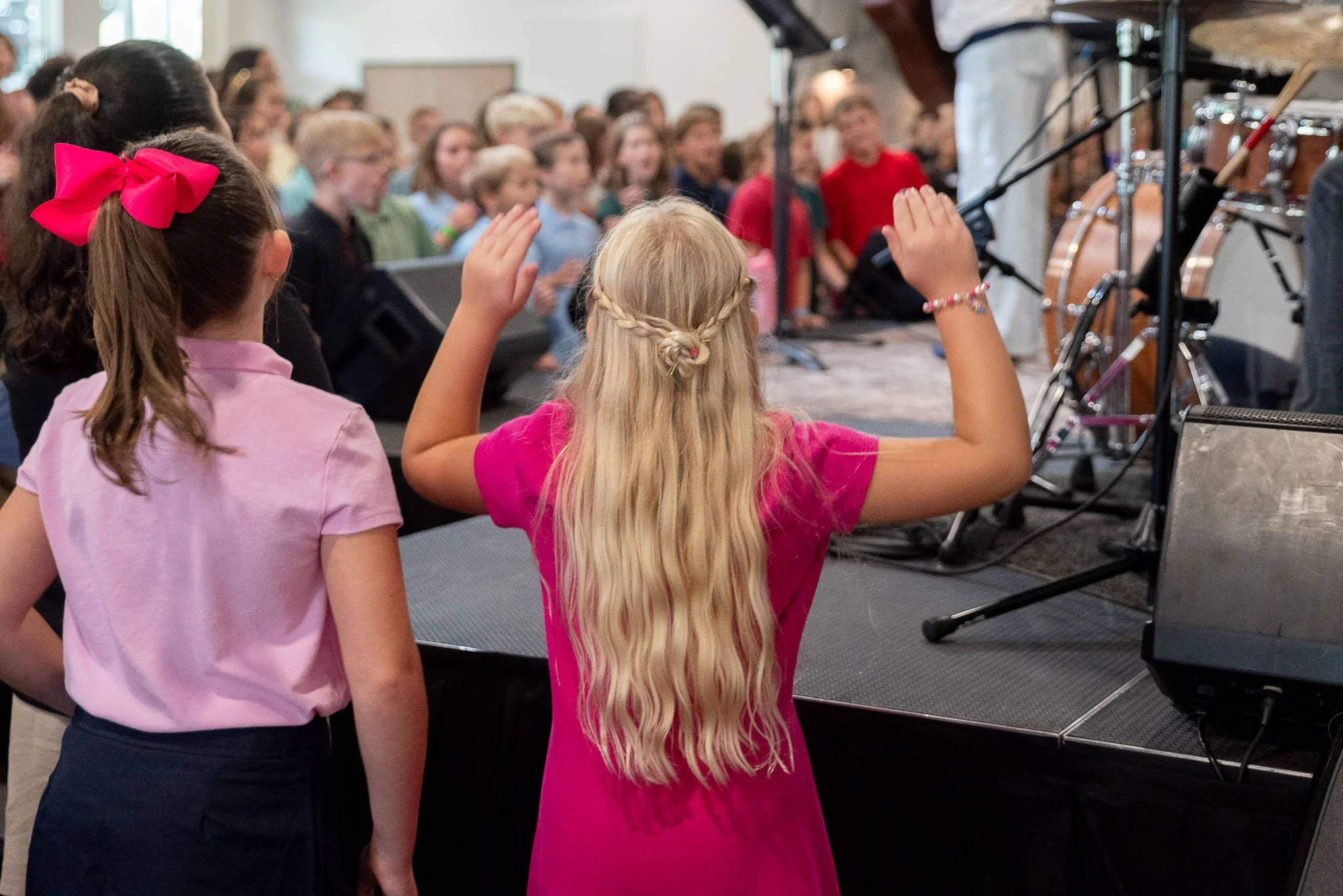
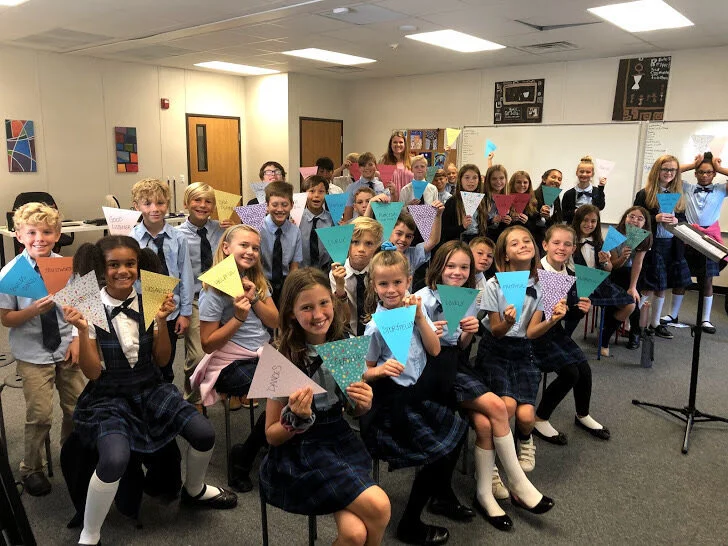
Dressed in their formal attire, students gather for chapel every Wednesday morning. Students receive biblical teaching from a variety of their teachers and often activities that reinforce the value being shared!
In the midst of trying to settle my thoughts and teach them a new worship song, I grew impatient. I put down the guitar for a moment, and gave the kids my dad stare (you know, the this-is-about-to-get-serious look). The conversation with them that followed made me think more deeply about the lack of understanding about what is ‘sacred’ among kids these days.
According to research, Generation Z (anyone born after 1994) is the least religious of the generations preceding it. For kids, that means less going to church, less youth groups, less spaces for meeting and interacting with one another and the Lord.
So I told my kids, “Look, I’m not upset. I do want us to have some fun, but I also expect that when we worship the Lord we focus and ready ourselves to interact with the Lord in his Spirit, which makes even this living room…set apart, and sacred really.” The kids, while mostly quiet and trying to figure me out, sat up, engaged, and started to make connections with expectations on their behavior and attitudes during worship times at their school (the Academy) and times in prayer we have had at home.

Mr. Muñoz, with the assistance of some of his former students, lead worship for the entire student body during a school wide chapel service.
It made me think how Christian parents and educators need to be intentionally defining what sacred is for children, especially when it comes to spaces where they interact with the Lord. This is why I am so thankful for our Wednesday “Spiritual Emphasis Days” at the Academy.
From kindergarten through high school, Wednesdays are centered around worship in song and hearing the word of God during chapel. Students also dress in their formal day clothing showing the ‘set apartness’ of the day. Younger students engage in classes like Heroes of the Faith and Jesus Movie, connecting biblical values to historical characters and popular media. Collaborative classes like Exploratory Hour and Games give students an opportunity to practice themes they are introduced to each week like perseverance, kindness, and cooperation. The older students spend significant time learning to worship in bands with expert worship leaders as instructors. Extended chapel times allow them time to be guided in the development of their own spirituality. It is all quite the effort on the part of the staff and volunteers, but well worth it.
Exodus 3:4 When the Lord saw that he had gone over to look, God called to him from within the bush, “Moses! Moses!” And Moses said, “Here I am.”5 “Do not come any closer,” God said. “Take off your sandals, for the place where you are standing is holy ground.”

Students and teachers share a moment of worship together on the last day of the fall 2019 semester. These are some of the most prioritized, sacred moments of our school year!
One of my great hopes is that the Academy will be a place where children can be educated in how to keep the name of the Lord and our interactions with Him a sacred space.