



Providing Meals to Kids during a Pandemic
Over the past 5 years at the Academy for G.O.D, I thought I had "seen it all" in terms of hurdles to us serving nutritional lunches to students. Tornados, severe weather, flooding, school cancellations because of sickness, construction of new school buildings on campus, and the list could continue. However, what none of us were prepared for was a pandemic that would begin to change what our 'new normal' would look like. We were looking at a total shutdown of 'in-person' classes, and our school made a choice to move to an online format for the rest of the semester.
Written by School Nutritionist, Mrs. Breann Chigumira

Rafael Reyes ensures the food is not only nutritious, but delicious too! The meals are not just basic sandwiches but greek pitas, taco salads, pizza pasta and more.
Over the past 5 years at the Academy for G.O.D, I thought I had "seen it all" in terms of hurdles to us serving nutritional lunches to students. Tornados, severe weather, flooding, school cancellations because of sickness, construction of new school buildings on campus, and the list could continue. However, what none of us were prepared for was a pandemic that would begin to change what our 'new normal' would look like. We were looking at a total shutdown of 'in-person' classes, and our school made a choice to move to an online format for the rest of the semester.
However, I knew that we could not just stop our school's nutrition program altogether. During the school year we serve breakfast and lunch daily to students, and now more than ever students and their parents need this support. With unemployment in Tennessee predicted to rise above 'great depression' levels, I knew that parents would be even more hard-pressed to feed their children.
During a health crisis we also have to acknowledge that ensuring children have proper nutrition will help boost their immunity toward this ever circulating virus. As I shopped at local stores looking for food for my family, I was challenged to find certain fresh fruits or vegetables and other nutritious items. If families are quarantined at home, how will they go to the store, if stores are out of food, how will families eat? These were all questions I knew our program could provide some solution to. Our school nutrition program has always emphasized fresh fruits and vegetables, and I knew that this was no time to reduce that intake for children.
For the everyday heroes who are part of school nutrition programs across the country, this was a time for us to step up and feed a vulnerable population. This was not the time to take a break or step back in fear. It was time to decide how to overcome obstacles, problem-solve, and ensure children have the best opportunity to thrive amidst a world in chaos. 1 John 4:18 was a motivating refrain behind these decisions: 'There is no fear in love, but perfect love casts out fear...whoever fears has not been perfected in love.' Instead of being anxious or acting out of fear, love drives me to do God's will to help kids in my neighborhood (while at the same time practicing the wisdom this pandemic necessitates).
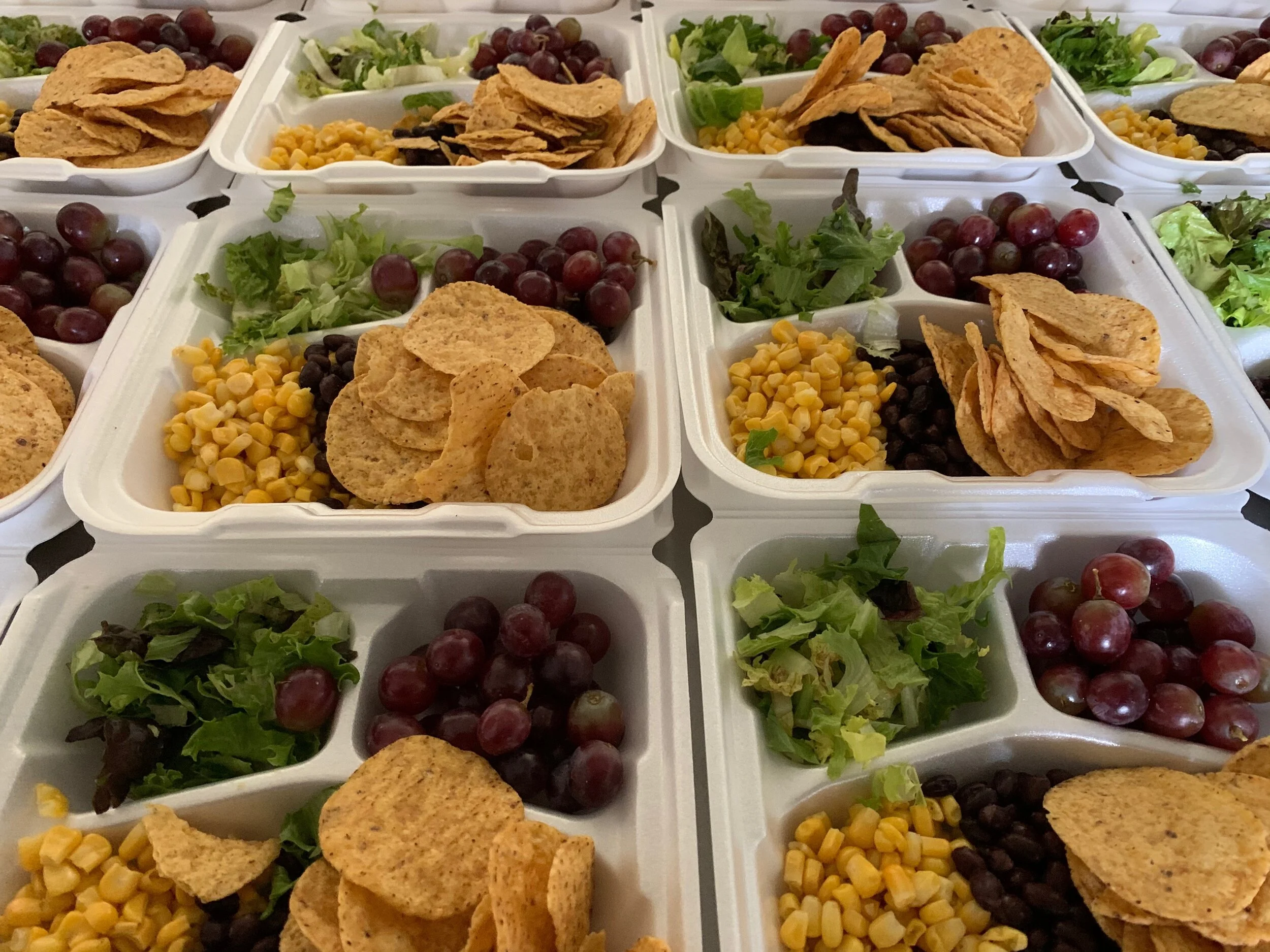
As often as possible, food is sourced locally. When we say “local” we mean down the hill at our on campus farm, Hopewell Farms.
As I realized the ongoing effects of COVID-19, I searched out grants and programs that would help our school to operate as a free meal site for any child under 18. I immediately got our application in to be part of the USDA’s ‘seamless summer option,’ this would allow our school to operate as a free meal site for any child under 18, during the COVID-19 pandemic. Broadening our focus beyond the Academy made it so that we could offer assistance to anyone in need in our proximity.

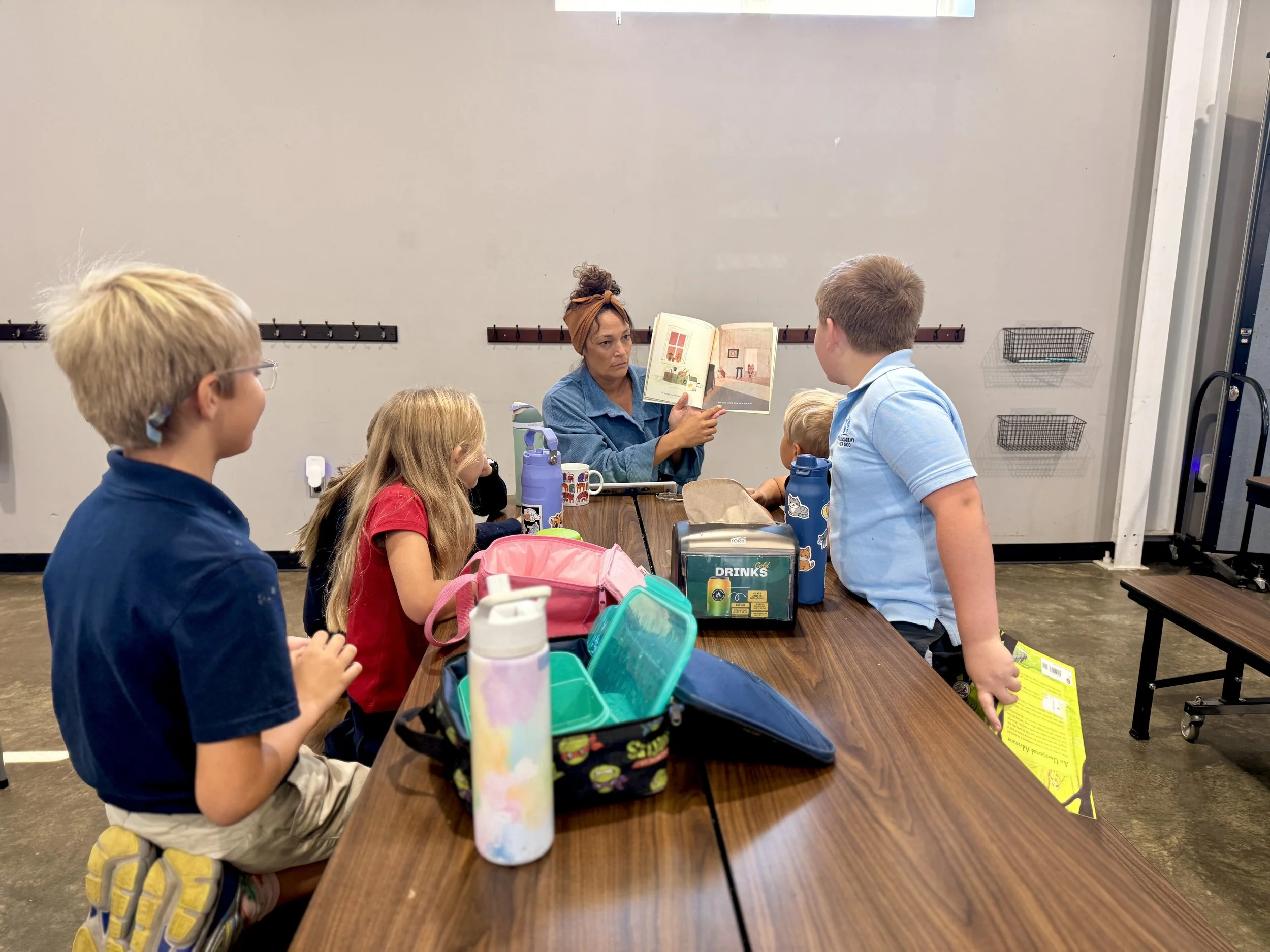
Every day what would normally be used for lunch tables are still used for lunch tables, just all packed to go. This team goes above and beyond with home delivery for those in the neighborhood, and a streamlined drive through service for those who are not.
Comparatively, our school nutrition program is not generally a huge operation. We are among a handful of private schools in all of Tennessee that operate under the USDA's National School Nutrition Program, with the rest being large school districts with 1,000s of students. Despite being a small site, I knew with some hard work we could serve our neighbors and those in need. Our first week, we served almost 2,000 meals (breakfast and lunch). Going into our second week, we are set to serve over 2,000! We are delivering meals in the Hopewell neighborhood. We also have a drive-through system for pick up Monday-Friday until the end of the semester. We completely revamped all of our operations to fit this new need, which was no small undertaking! Despite substantial food shortages, we have still been able to provide a variety of fresh fruits and vegetables along with fresh organic produce from our on-campus garden. We are also supporting several employees who now do not have to file for unemployment and still supporting local food businesses who need our patronage.
This has been an important time for us to step up to the challenge. I'm so happy with my team and our readiness to meet COVID-19 with faith that we can do our part. School nutrition may not always get to the forefront of daily news. But it's making a splash in this part of Nashville. It's nice to be reminded of this essential work, which contributes to the health of our communities -- our kids! I work with a team of everyday heroes who deserve applause! Groups like mine, all over the country, are stepping out and ensuring children are still taken care of, despite incredible challenges. That is a reason to keep hoping.

When Our Loss Becomes An Opportunity: Academy Online Goes Live!
Written by Mr. Muñoz, Elementary Vice Principal
I recently walked around the empty halls of our school building, and I felt a little sad about all the missed moments with our students over the past few weeks and the weeks to come. I miss hearing the kids laughing in the hallways and giving each other hugs. I miss seeing teachers smile at each other and share their stories. I miss glancing in the door windows to see teachers interacting with their students. While it does feel like a loss, I am reassured by remembering that with God even our losses can become opportunities.
Written by Mr. Muñoz, Elementary Vice Principal
I recently walked around the empty halls of our school building, and I felt a little sad about all the missed moments with our students over the past few weeks and the weeks to come. I miss hearing the kids laughing in the hallways and giving each other hugs. I miss seeing teachers smile at each other and share their stories. I miss glancing in the door windows to see teachers interacting with their students. While it does feel like a loss, I am reassured by remembering that with God even our losses can become opportunities.
Romans 8:28 “and we know that in all things God works for the good of those who love Him and are called according to his purpose.’
As a school community, we have a calling and love for God. I am challenged by this scripture today to focus on the opportunity that can come from God’s work on our behalf.

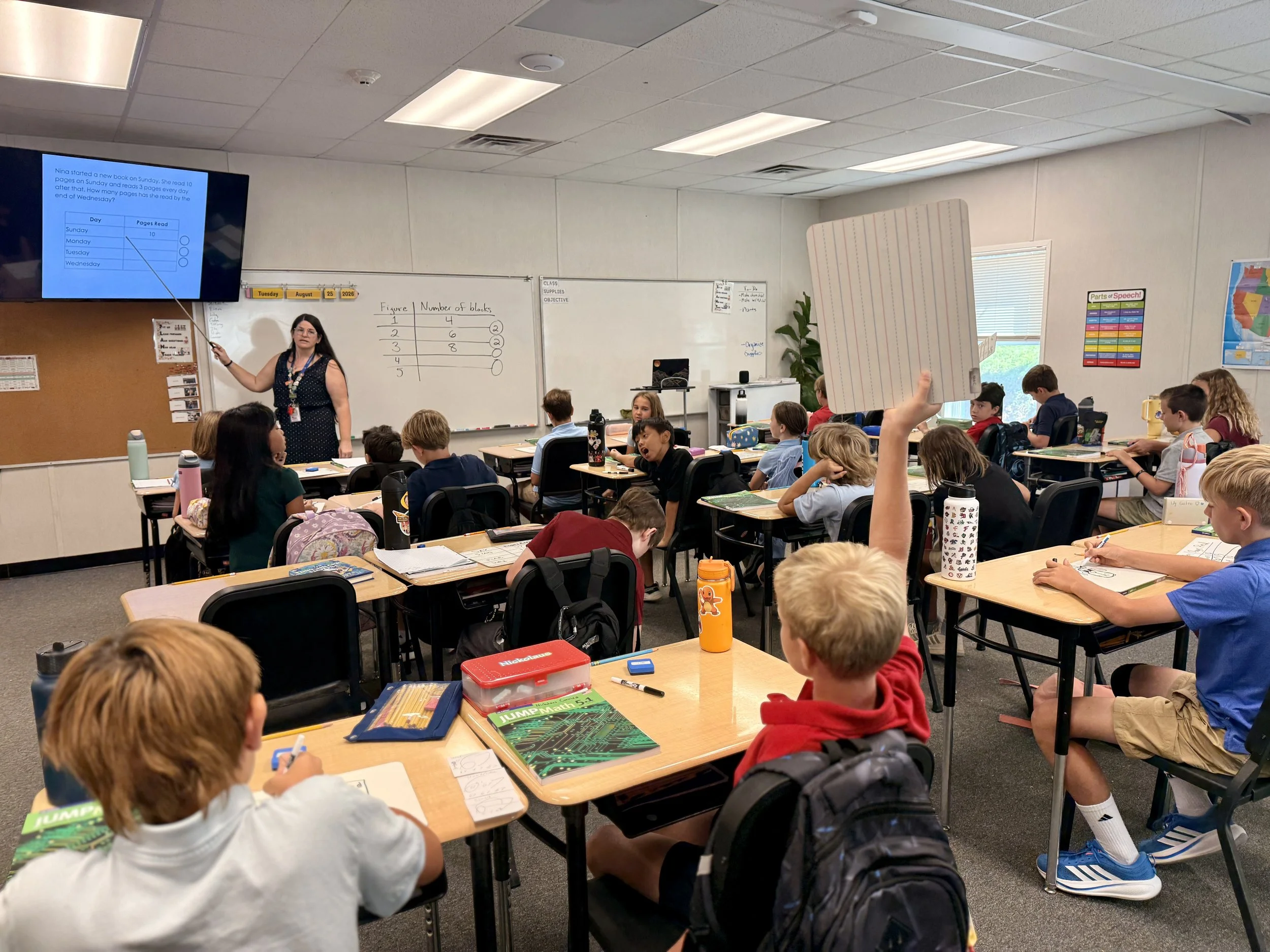
Elementary students check in with their teachers and classmates for a live session each morning, then begin their lessons for the day!
The Academy Online is one of those works, and our staff has been working with such diligence, creativity, and collaboration to prepare something special for our students. Mrs. Benoit, one of our elementary lead teachers had this to say about the program, "I am excited about the new program the Academy is rolling out and incredibly blessed to be part of something new and exciting! I'm thankful to be part of a team that works together to ensure that our students get access to the best education possible, despite the inability to come together in person. The dedication of the teachers and staff at the Academy never fails to amaze me. I'm always encouraged by the way everyone works together to continually strive to maintain access to our holistic education in a stress-free and fun manner for our students."
As we launch our program today, I can’t help but wish the doors of our school were open! At the same time, I couldn't be more excited for the opportunity in front of us through this new program. It will not only bless our students, but open up the door to bless students all over the world!

Split or Steal?! A Lesson in Generosity
During one of my recent Beginnings classes, I led a game called “SPLIT or STEAL” to create an opportunity for students to engage with “Law 8: Don’t take what doesn’t belong to you” (in real time). The game was an opportunity to decide if they wanted to share (“split”) or take a prize (“steal”) from their partner. Such is a very real decision that most of us unknowingly make daily.
During one of my recent Beginnings classes, I led a game called “SPLIT or STEAL” to create an opportunity for students to engage with “Law 8: Don’t take what doesn’t belong to you” (in real time). The game was an opportunity to decide if they wanted to share (“split”) or take a prize (“steal”) from their partner. Such is a very real decision that most of us unknowingly make daily.
Now you may say, “I do not decide each day whether or not I should steal.” However, as I'm teaching my students, I encourage you to not stay at the simplistic definition of not "taking an object that is the property of another". Instead, we're examining how stealing can go beyond that.

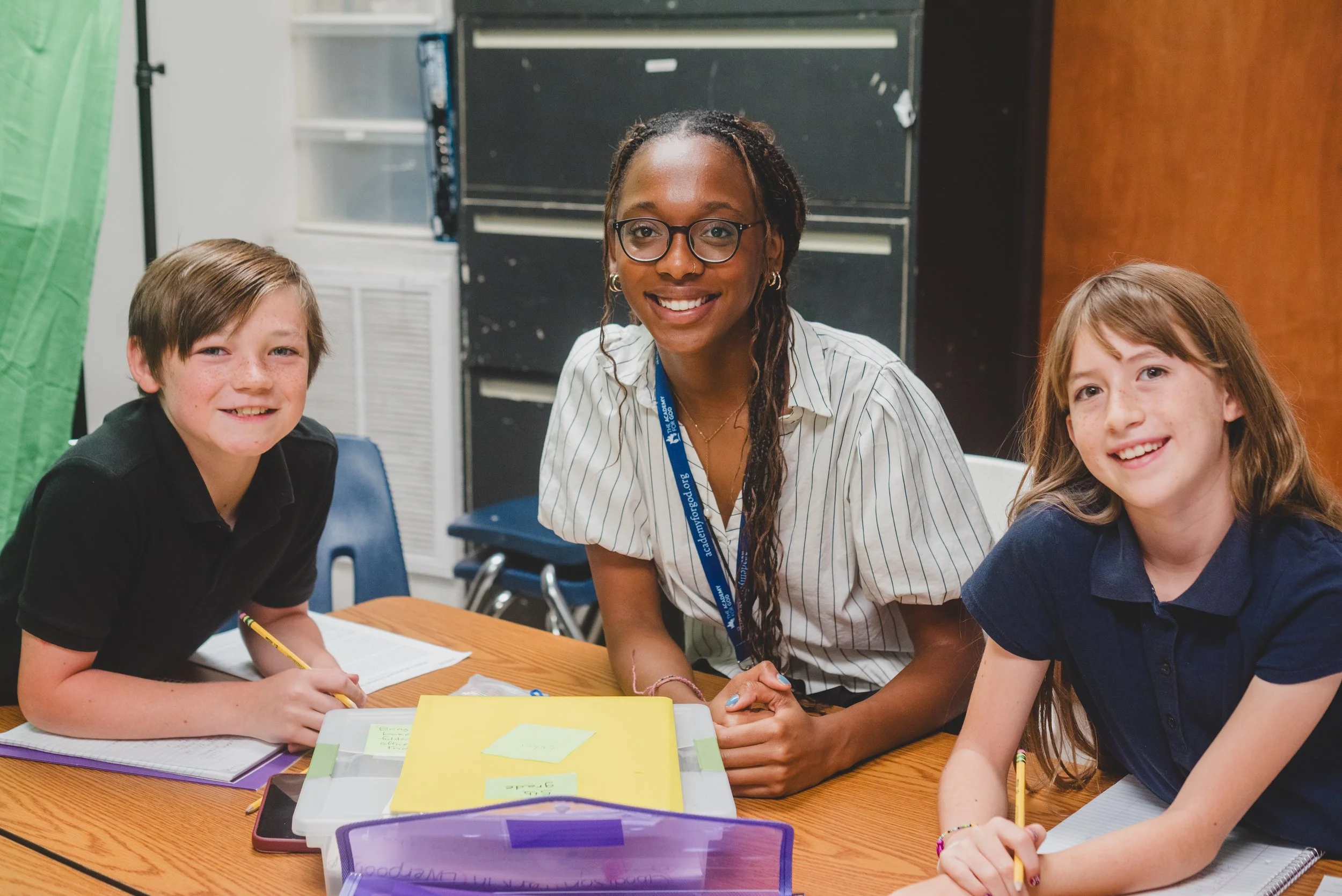
Elementary students play “SPLIT or STEAL” as an opportunity to consider another classmate’s preference or need.
In class, we discussed how they can take their friend's opportunity to learn away by shouting out answers instead of raising their hands. They also learned they could take a special celebration moment away by choosing to “one-up” a friend or be jealous and quiet when their peer may receive an award, praise, or DOJO points.
I pray this simple game continues to resonate with my students this year as they interact with their classmates. I hope we can continue to examine ways we could be tempted to "take" and rather respond with ways we can give generously to one another whether through praise, a helping hand, or a listening ear.
Education That Sticks
Written by Ms. Rebekah Davis, Specifics Level Lead Teacher
It is the hope of every educator that the lessons students learn at school stick with them and serve them well in life. Luke Loeffler is one student where that is certainly the case!

In 2018, Luke’s class raised the funds for this portable chicken tractor, which allowed their class pets to be moved from bed to bed in the Academy garden, fertilizing the soil with their manure. Not long after they received 6 chickens at just 2 days old!
In the fall of 2018, Luke’s homeroom class (10 yr. olds) undertook a project of raising chickens. They researched chicken care, fundraised for the necessary supplies and equipment, and finally welcomed 6 fuzzy yellow chicks into the corner of the Academy STEM room. All that school year, Luke and his classmates were responsible for the chickens’ care. They gathered scraps from school lunches for chicken feed, and when the chicks were mature enough to transfer outside, the students were responsible for daily letting them out of their coop and making sure the chickens had clean water and fresh bedding.
“When our class chickens were younger, I learned how to take care of the chickens and how to hold them properly so they wouldn’t freak out. I learned about basic care of several animals that semester,” says Luke, now 11. “It helped me a lot and taught me what to do before I got them on my own.”

Luke's parents today say they trusted that he was capable of caring for their family chickens because of his class experience!
This year, Luke’s family decided to start their own project of raising hens for fresh eggs! “We thought it would be a fun family project and great to get fresh eggs every day. It also helps my little sister get over her fear of animals.” Luke says with a grin. His family ordered 11 chicks, and just a few weeks ago, the mature hens began laying their first eggs.
“Now we get about 8-10 eggs a day, because they don’t all lay every single day,” Luke says knowledgeably. “One of my jobs is to make sure they have enough food and water each day. It’s very important that when they’re laying eggs the chickens have a good amount of food and water, otherwise their energy can’t go to producing eggs.”

These days Luke is responsible for feeding, watering, locking the chickens up at night to protect them from predators, and daily gathering their eggs!
His mother, Lyssa Loeffler, says that Luke was empowered through his school project of raising chickens. “It was a wonderful experience. I loved how the kids took responsibility for the chickens as a class and all the while receiving training in the responsibilities. It was definitely a positive experience for Luke, and when we started talking about getting chickens Luke really enjoyed being the expert on the topic!”
We are so thrilled to see students like Luke taking what he’s gained from school and putting it into practice at home, growing confident in animal husbandry, and contributing to the nourishment of his family!

The Adolescent Brain
If you are the parent or teacher of a Jr High student, at some point you may have asked yourself, “Has this child lost their mind?” Adolescents are notoriously emotional, impulsive, and rebellious: a perceived recipe for disaster. As I have developed as a teacher, I’m learning to see these characteristics as a new opportunity for learning. The truth is, they ARE ACTUALLY LOSING THEIR MINDS!
Written by Jr High Teacher, Mrs. Rachel Hartnell
If you are the parent or teacher of a Jr High student, at some point you may have asked yourself, “Has this child lost their mind?” Adolescents are notoriously emotional, impulsive, and rebellious: a perceived recipe for disaster. As I have developed as a teacher, I’m learning to see these characteristics as a new opportunity for learning. The truth is, they ARE ACTUALLY LOSING THEIR MINDS!

Teamwork and collaboration, which involve decision-making and emotional development, are skills that Jr High students are learning throughout their curriculum.
According to The Power of the Adolescent Brain by Thomas Armstrong (1), the teenage mind is working through the process of becoming more efficient, and in doing so, is deleting unnecessary gray matter in the prefrontal lobe. This causes the impulsive decision-making that is often perceived as rebellious and emotional. According to Strong, this developmental move is vital to give youth the courage and drive to break free from the parental nest and enter into adulthood. We can either fight against it and tell youth they are just hormonal or we could guide them in how to become discerning, independent decision makers. With my students, I am choosing the latter.
So, what does this mean for a teenager? Although they seem emotional, impulsive, and rebellious, they are also becoming self-aware, social beings with creative, independent thoughts. Academy teachers strive to help them understand how their brain functions so they can navigate good decision making. For example, instead of telling a student they're a rebellious teen, I explain that their brain is preparing to make decisions on their own because they are preparing to enter adulthood. Then I give them facilitated opportunities to make choices so they learn how to apply God’s word in their decision making. They are given choices in what they want to learn about, choices in how they will complete homework, sometimes they create their own rubrics for grading an assignment, and even have an opportunity to grade themselves. We then discuss the outcome of their decisions, if it fulfills the intended purpose, or how different decisions would have better fulfilled their intended outcome.
Recently, my students were given the task of holding one another accountable to complete homework, implement the scripture of the week, lead small group discussions, and maintain spiritual conversation in the classroom. They created their own rubrics to evaluate how well they and their classmates were completing these tasks according to what they have learned in the Word. Then, they got to meet with one another and discuss how their evaluation of themselves compared with their classmates. This allowed them to take responsibility for classroom expectations through discussion, implementation, and evaluation. This also challenged them to continuously consider the needs of their class and how to meet those needs as a team.
Teens desperately want independence, to feel heard, and to believe that others see them as valuable. As a teacher, I structure my classroom and assignments in a way that my students feel their voice is valued while also teaching them how to make discerning decisions, and I’m encouraged by their response in the process!
(1) Armstrong, Thomas. The Power of the Adolescent Brain:Strategies for Teaching Middle and High School Students. Alexandria: ASCD, 2016.