





Now Accepting Applications for ‘25-’26
The Academy for GOD is now accepting applications for ‘25-26 enrollment!

We are excited to announce that The Academy for GOD is now accepting applications for K-12 enrollment for the upcoming academic year! If you are looking for an educational environment that nurtures both academic excellence and spiritual growth, The Academy may be the perfect fit for your family.
Application Deadline: March 1st
Applications will be accepted until March 1st. After the deadline, our admissions committee will carefully review all applications to determine if the Academy for GOD aligns with the needs and values of each prospective family. Our goal is to ensure that every student we admit will thrive in our unique educational setting.
How to Apply
Getting started with the application process is simple. Prospective families can visit our website at www.academyforgod.org/apply to begin. The online application is designed to be straightforward, providing us with essential information to understand your child’s educational background, interests, and needs.
Tour Our Campus
Throughout the month of February, we are offering select tour dates for prospective families. This is an excellent opportunity to see our campus, meet our dedicated faculty, and get a feel for our community.
To sign up for a tour, please visit www.academyforgod.org/visit. Spaces for tours are limited, so we encourage you to reserve your spot early.
Why Choose the Academy for GOD?
At The Academy for GOD, we are committed to providing an education that balances academics with spiritual development. Our holistic approach prepares students not only for academic success but also for a life of purpose and integrity. We foster a supportive community where students are encouraged to explore their passions, develop critical thinking skills, and grow in their faith.
If you believe The Academy for GOD could be the right fit for your child, don’t wait—apply today and take the first step towards a transformative educational journey!

Busting 3 Big Myths About School Lunches
School meals have come a long way in the past decade. Yet, some myths about government-funded lunch programs are still hanging around like an old lunchbox no one wants to clean out. Let’s clear the air with a look at the top three myths about school lunches—and the surprising truths behind them.

The Academy for GOD has proudly served school meals as part of the USDA school meal program since 2014.
Myth #1: Government-Provided Food Is Low Quality
Picture this: a truck pulls up with “commodity food” written on the side, and out rolls... boxes of fresh produce and familiar brand-name staples you probably have in your own kitchen. That’s right! The fruits and veggies in school lunches aren’t some mysterious, lower-grade option. They're the same apples, oranges, and carrots you can find at your local grocery store.
Government programs partner with schools to deliver top-notch ingredients, no additives in sight. Our school even gets farm-fresh produce, adding a wholesome crunch to every meal. So next time you hear someone cite “government food,” just remind them—those apples are great quality.
Myth #2: Nutritional Standards Are Lax
Once upon a time, school lunches might have been a land of mystery meat and greasy pizza. But in 2010, the Healthy Hunger-Free Kids Act swooped in and completely revamped the game. Think of it as a glow-up for school meals.
This act tightened the reins on fat, sugar, and sodium while rolling out the red carpet for whole grains, fruits, and veggies. Portions got a makeover too—goodbye oversized servings, hello balanced plates! Today, every bite is carefully calculated to meet strict nutritional guidelines. Behind the scenes, schools track every calorie to ensure meals are both tasty and healthy. It’s not just food—it’s science on a tray.

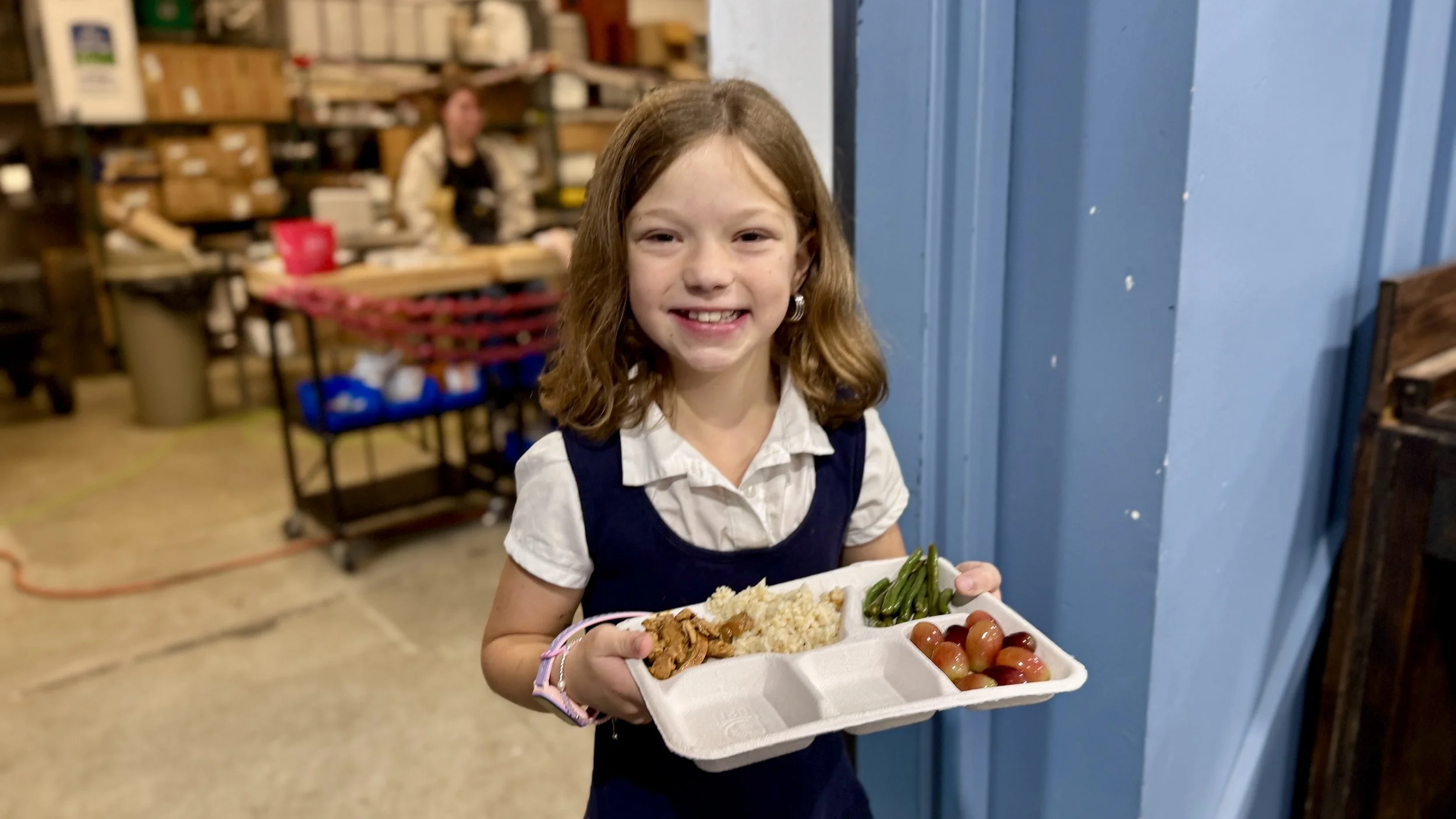
The dining hall is a place of joy and laughter as students share a meal together each day!
Myth #3: Schools Have No Say in Their Menus
False! While schools must follow federal nutritional guidelines, they still have the freedom to get creative with their menus. Want to highlight cultural flavors? Go for it! Interested in introducing students to global cuisines? Yes, please!
At our school, we prioritize scratch-made dishes over heavily processed foods and love exploring flavors from around the world. From savory curries to homemade pasta dishes, our menu is all about blending health, variety, and a touch of adventure. And because we know what our students like, we ensure the meals aren’t just nutritious—they’re also delicious.
The Bottom Line
School lunches are healthier, fresher, and more flexible than ever before. So the next time someone clings to outdated ideas about cafeteria food, serve them the facts. Government-funded lunches are dishing up quality and nutrition, with plenty of room for schools to make them their own. Who’s ready for a taste?

Get Ready for the Academy for GOD’s Annual Read-A-Thon!
We’re excited to announce that the Academy for GOD’s Annual Read-A-Thon is just around the corner! This tradition is a highlight of our school year and a fantastic way for elementary students to dive into the world of reading while helping to support our school. It’s not just about raising funds—it’s about fostering a love for books, building literacy skills, and bringing our school community together.
We’re excited to announce that the Academy for GOD’s Annual Read-A-Thon is just around the corner! This tradition is a highlight of our school year and a fantastic way for elementary students to dive into the world of reading while helping to support our school. It’s not just about raising funds—it’s about fostering a love for books, building literacy skills, and bringing our school community together.
This week, students will bring home flyers with all the details they need to get started. Each student will be setting up their own reader dashboard, where they can track their reading progress and set personal goals. We encourage families to get involved by supporting their students at home, whether it’s reading together, cheering them on, or helping to spread the word.
To make things even more exciting, there will be prizes for both classes and individual students! Every participant makes a difference, and we’re striving for 100% participation this year. Let’s work together to make this the most successful Read-A-Thon yet!


Calling All Business Owners and Sponsors!
Are you a business owner, or do you know someone who is? This is a wonderful opportunity to give back to the community and support literacy development. By sponsoring our Read-A-Thon, businesses will gain exposure to a wide audience of parents, students, and supporters who are passionate about education and community values.
We offer a limited number of digital and printed sponsorship spots, including the exclusive Literacy Champion sponsorship, so don’t wait to reserve your spot! Sponsors will have their businesses highlighted throughout our Read-A-Thon promotions, making it a win-win for everyone involved.
Click the button below to learn more and secure your sponsorship today. Thank you for your support of the Academy for GOD and for helping us inspire a lifelong love of reading in our students! Let’s turn pages and reach goals together!
School Meals: A Key to Reducing Chronic Disease
Proper nutrition during childhood and adolescence plays a vital role in shaping lifelong health outcomes. One of the most effective ways to support children’s health is by ensuring they participate in school nutrition programs, which guarantee access to a full serving of fruits and vegetables every school day. Research consistently highlights the positive impact of consuming adequate fruits and vegetables in reducing the risk of chronic diseases.
The Importance of Fruits and Vegetables for Growing Students
Health experts recommend that children aged 8 to 18 consume between 1.5 and 4 cups of vegetables and 1 to 2.5 cups of fruit daily, depending on their age, sex, and weight (1). However, meeting these nutritional goals can be challenging. School meal programs help bridge this gap by offering a diverse selection of fruits and vegetables, enabling students to choose options they enjoy while meeting their daily nutritional needs (2). In fact, students who participate in these programs can receive up to half—or even all—of their daily vegetable requirements during the school day.

This level of access benefits not only the students but also their families. Parents can rest assured knowing their children are getting a significant portion of their daily nutrient intake at school, reducing the pressure to prepare nutritionally complete meals at home. Additionally, the variety of produce offered in school meals exposes students to a broader range of nutrients, fostering better overall health.
How Fruits and Vegetables Combat Chronic Disease
Numerous studies have demonstrated the critical role of fruits and vegetables in preventing chronic illnesses. For instance, consuming adequate amounts is associated with lower risks of cardiovascular diseases and enhanced bone health. Furthermore, certain vegetables, particularly leafy greens, have been shown to offer protective effects against lung cancer. High-fiber foods, which are abundant in fruits and vegetables, also aid in the digestion of fats, proteins, and carbohydrates, contributing to obesity prevention and overall metabolic health.
Additional evidence links fruit and vegetable consumption to a reduced risk of various cancers, including intestinal, pancreatic, bowel, thyroid, and lung cancers. These nutrient-rich foods provide essential vitamins, minerals, and antioxidants that support the body’s natural defense systems (3).
Building Lifelong Healthy Habits
Participation in school nutrition programs does more than support physical health—it also serves as an educational tool. By regularly eating balanced meals that include full servings of fruits and vegetables, students learn what a healthy plate should look like. These habits can set the foundation for better dietary choices in adulthood, contributing to long-term disease prevention.
Incorporating school meals into a child’s daily routine is a simple yet powerful step toward improving health outcomes. By ensuring that students consume their recommended servings of fruits and vegetables, school nutrition programs not only reduce the risk of chronic disease but also foster healthier generations to come. Eating school meals is an investment in children’s current and future well-being—a step toward a healthier, brighter future.
(1) https://www.myplate.gov/eat-healthy/vegetables

A Lesson in Service: River’s Reflection on the Cox Family
River, a senior intern from the Academy for GOD, is working with the Community Services program at Global Outreach Developments Int'l. During his time with Community Services, River has been involved in local initiatives that support Nashville’s youth and elderly, gaining valuable experience in community service. In his reflection, River shares a memorable experience with the Cox family, where he learned from their wisdom and kindness. We invite you to read his reflection, where he highlights the impact of service and the deep connections that make this work so meaningful.
River, a senior intern from the Academy for GOD, is working with the Community Services program at Global Outreach Developments Int'l. During his time with Community Services, River has been involved in local initiatives that support Nashville’s youth and elderly, gaining valuable experience in community service. In his reflection, River shares a memorable experience with the Cox family, where he learned from their wisdom and kindness. We invite you to read his reflection, where he highlights the impact of service and the deep connections that make this work so meaningful.
”Last Thursday, I had the wonderful opportunity to serve the Cox family and help Mr. Cox prepare his famous biscuits for the Academy staff. Mr. and Mrs. Cox are people of strong faith who have lived extraordinary lives devoted to the Lord, and it was truly special to serve them and hear some of their inspiring stories. They were so generous in sharing their wisdom, and I am deeply grateful for that.
Before we even started making the biscuits, Mrs. Nsubuga and I spent time asking questions, listening to Mr. Cox’s stories, and getting to know him better. His life is full of remarkable experiences, and I loved hearing about them. He shared how he had opened his home to teenagers who had been kicked out of their own, how he stepped in as a principal when the need arose, and how he served his church by becoming a pastor. Hearing these stories was powerful, and it became clear that Mr. Cox is the type of person who always says "yes" to the Lord. He often mentioned that even when he wasn't sure about something, he trusted in the Lord, and that struck me deeply.
Reflecting on my time with Mr. Cox, I thought about the parable of the wise and foolish men. In Matthew 7, it says, "Everyone then who hears these words of mine and does them will be like a wise man who built his house on the rock." Mr. Cox has built his life on the solid foundation of God’s word, listening to the Lord and living out His calling, saying "yes" to whatever He brought his way.
Once we began making the biscuits, Mrs. Nsubuga left, and it was just Mr. Cox and I in the kitchen. It was such a special time learning his secret recipe and talking with him. He continued to share more stories from his life, answering my questions with humor and wisdom. He has a remarkable gift for telling stories that are both funny and meaningful.
Mr. and Mrs. Cox are truly a blessing to be around. Their hospitality was overwhelming, and they generously sent me home with a bag of the biscuits we made. I’m grateful for the time I spent with them, learning from their wisdom and experiencing their kindness.”

